

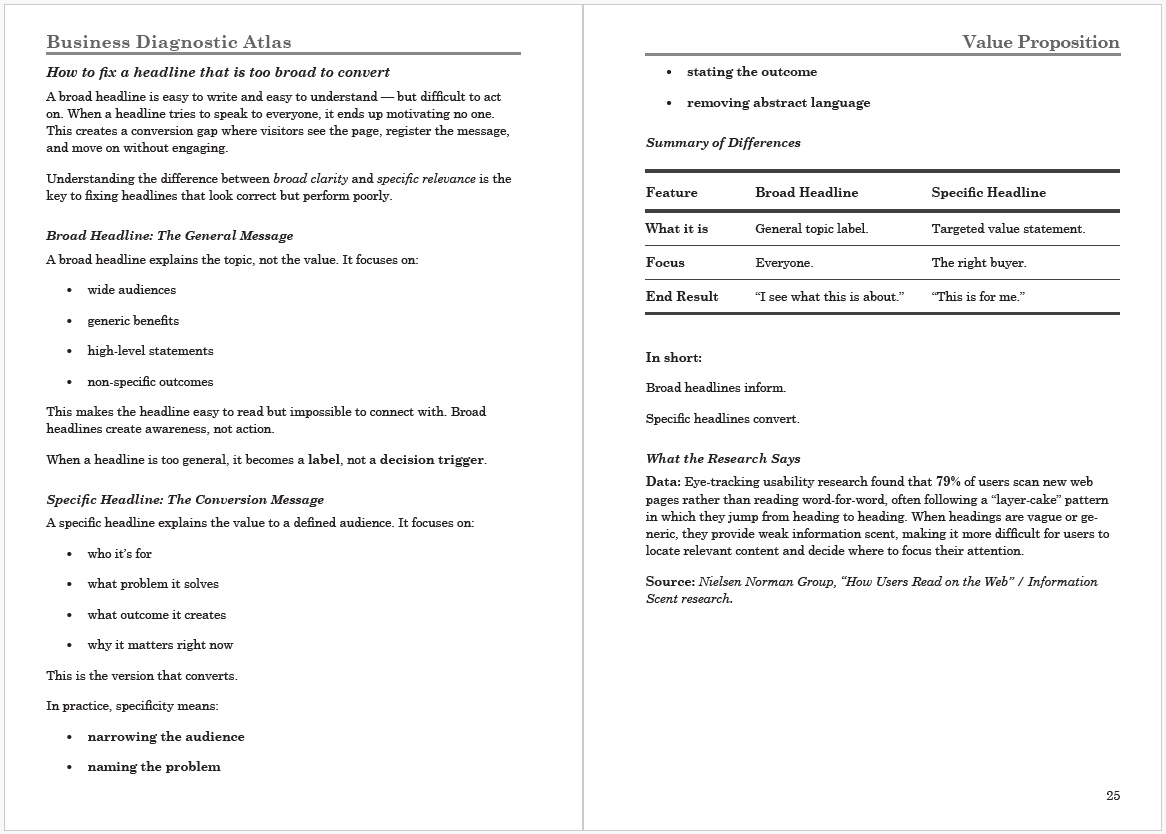
A broad headline is easy to write and easy to understand — but difficult to act on. When a headline tries to speak to everyone, it ends up motivating no one. This creates a conversion gap where visitors see the page, register the message, and move on without engaging.
Understanding the difference between broad clarity and specific relevance is the key to fixing headlines that look correct but perform poorly.
Broad Headline: The General Message
A broad headline explains the topic, not the value. It focuses on:
- wide audiences
- generic benefits
- high‑level statements
- non‑specific outcomes
This makes the headline easy to read but impossible to connect with. Broad headlines create awareness, not action.
When a headline is too general, it becomes a label, not a decision trigger.
Specific Headline: The Conversion Message
A specific headline explains the value to a defined audience. It focuses on:
- who it’s for
- what problem it solves
- what outcome it creates
- why it matters right now
This is the version that converts.
In practice, specificity means:
- narrowing the audience
- naming the problem
- stating the outcome
- removing abstract language
Summary of Differences
| Feature | Broad Headline | Specific Headline |
|---|---|---|
| What it is | General topic label. | Targeted value statement. |
| Focus | Everyone. | The right buyer. |
| End Result | “I see what this is about.” | “This is for me.” |
In short: Broad headlines inform. Specific headlines convert.
Broad vs. Specific Headlines: Five Real-World Examples
Example 1: A fitness coach
Broad headline:
“Transform Your Health and Fitness”
The visitor understands the general topic.
But relevance is missing:
“Is this really designed for someone with my goals, lifestyle and limitations?”
A specific headline could say:
“Lose your first 10kg with three 30-minute workouts a week — without spending hours in the gym.”
Now the headline gives the visitor a specific audience, problem and outcome rather than another generic promise.
Example 2: A recruitment agency
Broad headline:
“Find Your Next Career Opportunity”
The visitor understands that the company helps people find jobs.
But relevance is missing:
“What kind of opportunity are you offering, and is it relevant to my experience?”
A specific headline could say:
“Find senior finance roles with salaries above €100k — matched to your experience and career goals.”
Now the headline gives the visitor a specific type of role, salary level and reason to continue.
Example 3: A cybersecurity company
Broad headline:
“Protect Your Business From Cyber Threats”
The visitor understands what the company does.
But relevance is missing:
“Which threats are you protecting me from, and what happens if I don’t solve this?”
A specific headline could say:
“Stop ransomware from taking your business offline — with continuous protection for your business-critical systems.”
Now the headline identifies a specific threat and consequence, making the problem much easier to recognise.
SaaS marketing problems are often harder to spot than product problems.
The 1EuroSeo Strategic Business SaaS Marketing Audit can help you see where your positioning, messaging, audience or conversion strategy is working against the product — and what to fix first.
Example 4: A wedding photographer
Broad headline:
“Beautiful Photography for Your Special Day”
The visitor understands the service and the general benefit.
But relevance is missing:
“Why is this photographer right for the kind of wedding experience I want?”
A specific headline could say:
“Natural wedding photography for couples who want beautiful memories without spending their day posing for the camera.”
Now the headline identifies a specific audience, preference and outcome rather than simply promising beautiful photographs.
Example 5: A financial adviser
Broad headline:
“Plan Your Financial Future With Confidence”
The visitor understands that the service is about financial planning.
But relevance is missing:
“What specific financial question will this actually help me answer?”
A specific headline could say:
“Find out whether you can retire at 55 — and exactly what you need to change if you can’t.”
Now the headline gives the visitor a specific question, desired outcome and reason to take the next step.
High-ticket clients often make their decision about your expertise before the first conversation, based on what they find online.
The 1EuroSEO Personal Brand Audit can uncover gaps in your positioning, authority signals and client journey, so you can see exactly where your online presence is costing you opportunities.
Ask a Question or Share Your Opinion