

A strong visual identity can make a brand look polished, modern, and memorable — but it can also hide the actual value of the offer. When design becomes the dominant signal, visitors focus on aesthetics instead of outcomes. This creates a gap where the brand looks impressive but fails to communicate why it is worth choosing.
Understanding the difference between visual appeal and functional clarity is essential for fixing this problem.
Visual Identity: The Aesthetic Layer
Visual identity shapes how the brand feels. It focuses on:
- colours and typography
- layout and spacing
- imagery and style
- brand personality
This creates recognition and emotional tone, but it does not explain the value. A strong visual identity can make the site look premium while still leaving the visitor unsure about what the offer actually does.
When visuals dominate the message, the brand becomes a design experience, not a decision driver.
Functional Value: The Commercial Layer
Functional value explains why the offer matters. It focuses on:
- the problem you solve
- the outcome you deliver
- the reason your method works
- the impact on the buyer
This is the version that converts.
In practice, functional clarity means:
- stating the core value before the visuals
- making outcomes more visible than aesthetics
- showing proof instead of decoration
- using design to support the message, not replace it
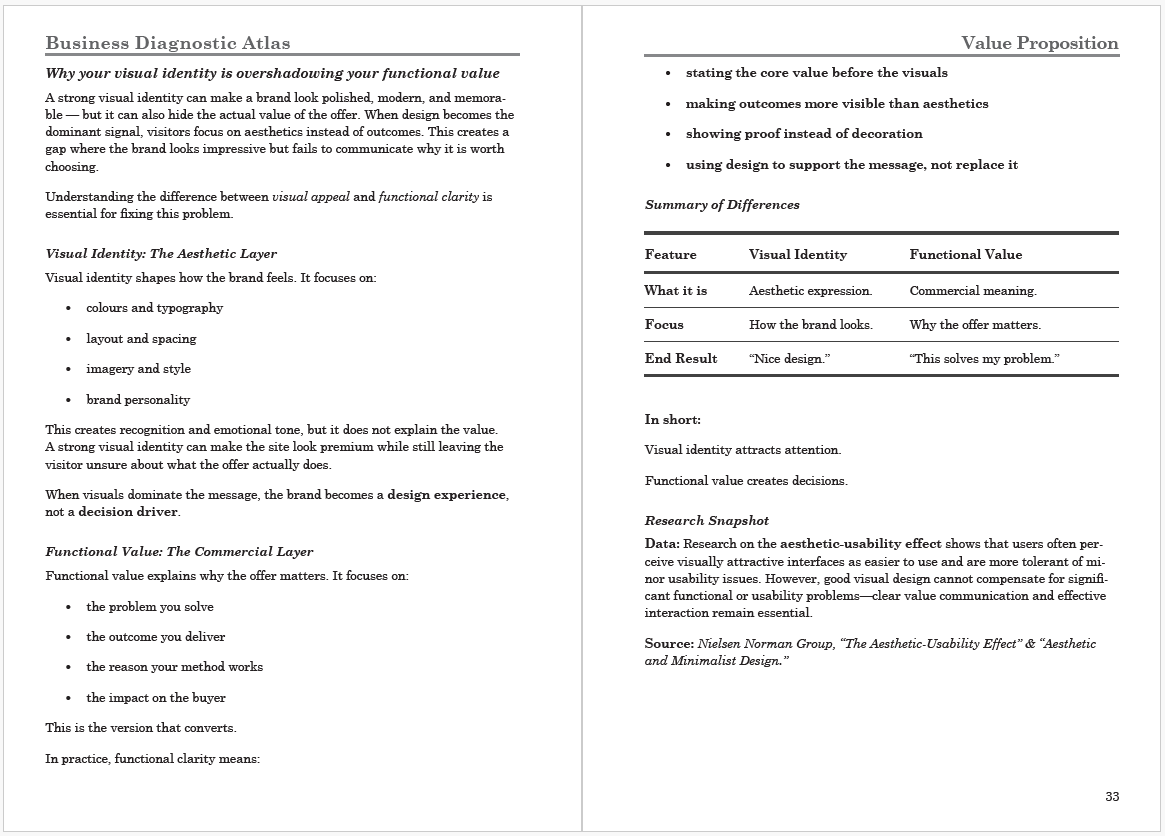
Summary of Differences
| Feature | Visual Identity | Functional Value |
|---|---|---|
| What it is | Aesthetic expression. | Commercial meaning. |
| Focus | How the brand looks. | Why the offer matters. |
| End Result | “Nice design.” | “This solves my problem.” |
In short:
Visual identity attracts attention.
Functional value creates decisions.
Visual Identity vs. Functional Value: Five Real Examples
Example 1: A luxury furniture company
Visual identity:
“Discover our beautifully curated collection of contemporary furniture, designed to bring timeless elegance and sophistication into your home.”
The website looks premium and communicates a strong aesthetic.
But functional value is missing:
“The furniture looks beautiful, but why should I buy it from this company?”
A function-focused version could say:
“Handcrafted furniture designed to last for decades, with custom dimensions and materials to fit your space rather than forcing your room around standard sizes.”
Now the visitor understands the practical value behind the premium appearance.
If your store attracts traffic but not enough customers, the 1EuroSEO E-commerce SEO Audit can identify whether you’re reaching the right searches and the right buyers.
Find the gaps that are costing you valuable traffic — and the opportunities to turn search visibility into qualified customers.
Example 2: A software company
Visual identity:
“A beautifully designed workspace for modern teams to connect, collaborate and create.”
The brand feels modern and polished.
But functional value is missing:
“What problem does this actually solve for my team?”
A function-focused version could say:
“Replace scattered project updates across email, spreadsheets and chat with one workspace where everyone can see what needs to happen next.”
Now the message explains the functional problem being solved, rather than relying on the design to communicate value.
SaaS marketing problems are often harder to spot than product problems.
The 1EuroSeo Strategic Business SaaS Marketing Audit can help you see where your positioning, messaging, audience or conversion strategy is working against the product — and what to fix first.
Example 3: A restaurant
Visual identity:
“An immersive dining experience where contemporary cuisine meets art, atmosphere and creative expression.”
The brand creates a sophisticated impression.
But functional value is missing:
“Why should I choose this restaurant for my evening?”
A function-focused version could say:
“A seasonal tasting menu built around local ingredients, with each course served as part of a two-hour dining experience.”
Now the visitor understands what they are actually buying, not simply how the restaurant wants to be perceived.
Example 4: A financial adviser
Visual identity:
“A new approach to wealth, combining modern thinking with a more personal financial experience.”
The brand feels modern and exclusive.
But functional value is missing:
“What will this adviser actually do for me?”
A function-focused version could say:
“We build and manage your investment strategy around the income you need, the risks you can accept and the date you want to retire.”
Now the visitor sees the specific service and outcome behind the premium positioning.
High-ticket clients often make their decision about your expertise before the first conversation, based on what they find online.
The 1EuroSEO Personal Brand Audit can uncover gaps in your positioning, authority signals and client journey, so you can see exactly where your online presence is costing you opportunities.
Example 5: A luxury skincare brand
Visual identity:
“Elevated skincare inspired by nature, science and the art of modern beauty.”
The packaging and branding communicate luxury.
But functional value is missing:
“What will this product actually do for my skin?”
A function-focused version could say:
“A daily moisturiser formulated to reduce visible dryness and strengthen the skin barrier without leaving a greasy finish.”
Now the product has a clear functional benefit that the visual identity can support rather than replace.
Ask a Question or Share Your Opinion